
If you don't have the line… you won't have the time!
What is the Best Race Line...
- Best race line:
- The best route down a course?
- Winner has:
- fastest average speed
- Not forgetting peak speed variations in course
- Best choice of turn styles:
- Round, High, Deep, Direct, Turn Shapes
- Tactics:
- Relationship to skill, strength, courage & tactical awareness
If you don't have the line… you won't have the time!
Winner: fastest average speed... but consider this...
- Peak Speeds:
- Some skiers may achieve the faster speeds through some sections of the course by comparison to other racers but may not be the fastest overall
- Maintaining speed:
- Skiers that have fastest top speed may not be able to maintain relatively high speeds throughout the entire course. Thus affecting the average speed
What is race line…
- The best choice of route to achieve fastest overall average speed
- Depending on your:
- T – Technical (skill level)
- ABC's: Agility, Balance, Co-ordination,
- Fundamentals: movement control, general motor skills
- Skill level: Initiation, Acquisition, Consolidation, Refinement, Create Variation
- T – Tactical (right choices)
- Start, line, turn shape used, etc.
- P – Psychological (courage)
- Commitment, metal preparation, getting into the zone, doing it
- P – Physical (strength)
- flexibility, speed, strength, endurance, reaction
- E – Environment (terrain, surface, weather, atmosphere)
- Wet, cold, hot, dry, windy, noisy, away slope, plastic, snow
- E – Equipment (right equipment, prepared correctly)
- correct skis & boots, sharp & waxed, poles, helmet, gloves, etc. have you got them!
- T – Technical (skill level)

'Round' Line...
- Overview
- Round & Conservative
- Pressure in the skis deflecting the COM AROUND the gate
- A progressive and smooth change in direction
- LOW level of risk
- Type of racer
- Younger / inexperienced skier
- Lesser skilled skier
- Poor finisher; increase finish rate
- Summary
- With the very rounded line the skiers Centre of Mass (COM) travels much further than with a more direct approach.
'High' Line...
- Overview
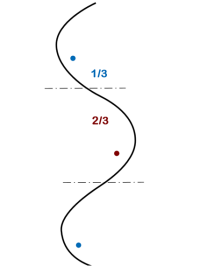
- More of turn above the gate & time to initiate
- Pressure on the skis deflecting the COM mainly ABOVE the gate
- A progressive and smooth change in direction
- LOWER level of risk
- Type of racer
- More experienced racer
- Requires greater skill, timing, early initiation
- Difficult part of a course… big offset / short distance
- Faster when used with a comma shape turn
- Consistent and solid performance
'Deep' Line...
- Overview
- Rounded & often described as late
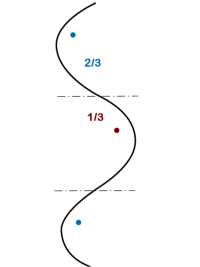
- Pressure on the skis deflecting the COM mainly BELOW the gate
- Turn started by the gate
- HIGH level of risk … but can be rewarding
- Type of racer
- Skiers on wrong line
- Mistimed turns
- Inexperienced
- Some skiers with poor guarding
- Can't afford to skid
- Associated with 'J' shaped turn
- Can be used to great effect by the experienced racer
'Rounded' Line in General...
- Low level of risk... high finish rates
- More ground covered
- More across the fall line... loss of speed
- Average speed on the slower side
- Generally allows use of fairly static linking
- Can lack energy and drive
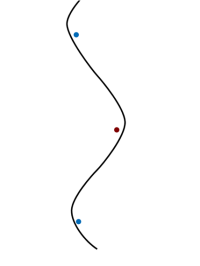
'Direct' Line...
- Overview
- Results in high peak speeds
- Difficult to ski like this with out making numerous mistakes
- Difficult / near impossible to do over full length of a course
- Any mistakes made will affect the overall performance & average speed
- High degree of risk
- Type of racer
- Experienced racers
- Very skilled skier
- Athletic, agile, strong skiers
- Need to be precise
- Ability to switch in and out of this type of turn style
- Can be associated with 'J' and comma ',' shaped turns
- Summary
- Skiers Centre of Mass (COM) travels much shorter than with the rounded line approach. Effective use of the fall line
'Direct' Line in General...
- Higher level of risk
- More ground covered
- More in the fall line
- Average speed faster... if course completed
- More dynamic linking of turns
- Requires energy and drive
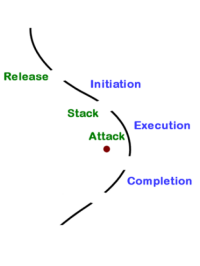
Turn Definitions
- Initiation
- Has crossover or crossunder transition
- Indepenent leg action
- 'Glide Out' & 'Glide In' phases
- Initial projection and inclination of body and legs into new turn
- Execution
- Just use ski side cut
- Angulation, upper lower body separation
- Completion
- boots, legs working similtaneously and symmetrically
- Release, Stack, Attack
- Get to your release point, release the pressure and start to role the edges
- Transition on to your new set of edges for the new turn by allowing your upper body to flow towards the apex of the next turn
- Stack up your leg bones at the correct angle to enable both ski edges to engage with the snow to create the appropriate turn, get it right first time
- Progressively pressurise the skis appropriately for the turn and terrain
- Attack the race line, not the gates
'Choice' of Line...
- Will depend on how well you...
- Initiate, execute and complete the turn
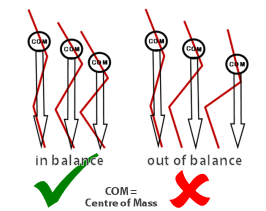
- Remain in balance and
- Control pressure on the skis
- By flexion and extension
- Allow the legs to rotate with appropriate tilt
- Ability to do the right turn in the right place
Controlling the transition between turns…
- Enables you to setup the turn:
- Centred flexion and extension is critical
- Timing is critical
- Application of appropriate ski tilt and pressure is critical
- What I see sometimes:
- Poor or to little pressure control
- not enough, too much, flying off the arc,
- skidding, sudden loading
- Loss of balance
- Falling off the back, no projection
- Lack of timing
- slow, rushed - often caused by delayed, too slow transitions between edge sets.
- Lack of flexion and extension control
- limited range, static, too much down, too much up
- Inappropriate guarding
- Over reaching, excessive body rotation, punching the gates, stiffening up, timed to the gate not the turn
- Poor or to little pressure control
Leg 'Flexion and Extension'...
- Leg Flexion
- A coordinated and controlled movement by bending of the ankle, knee and hip joints whilst keeping in balance
- Leg Extension
- coordinated and controlled movement by straightening of the ankle, knee and hip joints whilst keeping in balance