Race Start Technique

How Do You Currently Do Your Race Start

  1. STEP OUT - Step start, simply stepping out the start gate one foot at a time.
    • Pros: Little effort required.
    • Cons: Slow start as first leg to move trips wand and time starts before other foot has left start position.
  2. PUSH START - Simple push start, push out using backward thrust of arms to push feet forward.
    • Pros: Clean away, usually in balance, easy safe start for novice racers.
    • Cons: Not much power and speed through wand and into course, need to get arms back to a forward balanced position quickly.
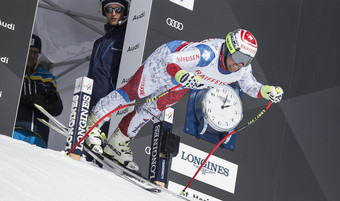
  3. JUMP START - Twin foot heels up jump, assisted by forward push from arms.
    • Pros: Clean start, can be powerful and fast, good balance in to course.
    • Cons: Needs all round body strength and co-ordination, need to get arms back to a forward balanced position quickly.
  4. SLIDE START - Slide skis forward from stationary position using backward thrust from arms to slide skis and feet forward.
    • Pros: Moderate start speed, Clean start, in balance, good for non-lead out dual slalom starts as no time wasted going backwards before going forward.
    • Cons: Needs lots of arm strength and coordination to generate speed, need to get arms back to a forward balanced position quickly.
  5. STAMPER - One leg stamp, immediately followed with twin foot forward jump assisted by backward thrust from arms projecting feet forward.
    • Pros: Similar to JUMP START but uses stamp as a trigger for the twin foot jump phase.
    • Cons: Can prematurely hit wand in start gate and set timer off.
  6. SLIDER - Slide skis back, then fire feet and skis forward using backward push from arms
    • Pros: Can generate a lot of speed.
    • Cons: Needs a lot of core strength and coordination from back, abdominals and arms, can slide back too far out of range for optimum power, can be tricky when ski surface is slippery or sticky.
  7. ROCKER - Keeping skis stationary, rock upper body back beyond a squat position, fire upper body forward followed by backward pull through from arms.
    • Pros: A lot of speed can be generated.
    • Cons: Can be out of balance when leaving the start gate and have problems recovering balance and establishing early line. Can have problems with catching wand with poles.


A More Effective Way To Start

  1. Plan your movements ahead so that your are focusing on setting up your start for a good entry in to the first gate.
  2. Place your boots just behind but not touching the start wand with enough room to allow you to flex your boots without hitting the start wand.
  3. Place your ski pole tips on the other side of the start wand. Hold your poles tightly and correctly on the handles, shoulder width apart.
  4. Within the time allowed (5 seconds) after the command of the starter or the starting system beeps jump the tails of your skis upwards by straightening your legs quickly and powerfully and allow your upper body to tilt forward taking some weight on your ski poles. Allow your body to move forward supported by your ski poles. Keep your arm movement inline from the forward position of your shoulders driving backwards, i.e. do not allow your hands to collapse inwards or stray outwards. Make sure there is only a forward movement of the upper body, i.e. you are not accidentally jumping upwards.
  5. When your body is forward of the start wand push back on your poles by straightening the arms keeping to drive the upper body and accelerate forward through the start wand. Ensuring the arm motion remains line with your shoulders through this power move. More experienced racers may push their legs back exaggerating the forward motion of the upper body even more before the boots open the start wand. There is no upward movement of the body, except for the feet, when the feet push back.
  6. Skate and push hard with your poles. Raise your chin to see the course and watch for soft snow on the sides of the starting area to prevent catching your edges.
  7. Remember to have in mind a good visual of the direction of travel required in order to setup the amount of attack for the first turn in to the first gate.
  8. Think of the above as being a series of interlinked phases in order to eliminate any stops or pauses in momentum.
     

All though I can't run the official courses required to pass the exams (these are run by the official organisations and partners listed below), I can offer you generalised instructor training, coaching and mentoring across all levels, standards and syllabuses. This will give you the right foundations and help you go forward with confidence and attend the courses giving you a great chance of passing the required standards and levels for a successful outcome.

To give you some idea of the level of UK instructing and coaching I am including the current structure below, this may be subject to change so I have also included links to the organising bodies and their course calendars.

NB: I am an official and active Snowsport England UKCP Performance Coach Mentor.

There are three strands to ski coaching and instructing in the UK

National Governing Body for Snowsport Pathways - GB Snowsport, Snowsport England, Snowsport Scotland and Snowsport Cymru Wales

Development & Instructing Pathway

UK Coaching Pathway Course Calendar

Level

Remit/Scope

L1 Instructor

    Over 16 for course

    Snowlife Level 7

Novice participants on artificial slopes

L2 Instructor

    Over 18 for course

    Snowlife Level 8

Advanced participants on artificial slopes

L3 Development Coach

Works with local artificial ski centre, make a significant contribution to the development of New Coaches

L4 Development Coach

Work with club recreational participants in an alpine environment and prepares candidates as tutors for UK Snowsports courses.


Alpine Coaching Performance Pathway (Racing)

Level

Remit/Scope

L1 Coach

    Over 16 for course

Entry Level Coach

  • Able to deliver a structured training session
  • Able to deliver parts of a Long Term Athlete Development Programme(LTAD)
  • Basic skills (skiing and coaching)
  • Able to inspire and motivate
  • Have coaching and communication skills
  • Able to paint a competent picture by demonstrating
  • Have been exposed to a basic decision making process
  • Able to deal with emergency procedures
  • Able to set basic training courses (LICENCED STATUS only)

L2 Coach (APC-1)

    Over 18 for course

Club Coach/League Coach

  • Able to contribute to LTAD programme
  • Able to deliver a series of sessions
  • Able to deliver without direct supervision
  • Able to set a range of training courses in accordance to rules and egulations for children
  • Basic knowledge of the rules
  • Working awareness of safety
  • Competent skier analysis – biomechanics of racing
  • Understanding of growth maturation
  • Strength and Conditioning – basic knowledge
  • Competent technical model by demonstration
  • Carve skis cleanly on red slopes and ski variables in balance
  • Understanding of basic ski preparation
  • Coaching skills
  • Teaching styles
  • Communication
  • Technical and Tactical knowledge
  • Understand the position of role model
  • Be aware of the ethical code

L3 Coach (APC-2)

Head Coach

  • Design an effective and appropriate Long-Term Athlete Development (LTAD) plan for U10 to
    FIS level athletes
  • Show a high level of reviewing skills in order to improve personal coaching performance as
    well as the coaching performance of their coaching team
  • Plan and deliver a session to achieve a desired outcome that fits within an athlete's longterm programme using effective coaching theory, such as coaching styles, skill development
    and LTAD.
  • Organise, manage and develop a team of coaches
  • Understand strength and conditioning concepts and how to apply these for U10 to FIS
    athletes
  • Demonstrate a good level of technical understanding and performance analysis of athletes
  • Demonstrate commitment to safety and welfare complying with the UKCP Code of Ethics
    and Conduct for Snowsport Coaches
  • Show comprehensive knowledge of current competition and equipment rules (ICR and BCR)
  • Demonstrate a good understanding of how to develop an athlete.

L4 Coach

National Team Coach

  • by appointment


British Association of Snowsport Instructors (BASI)

Professional Ski Instructors generally working for a Ski School

BASI Course Calendar 

Level

Remit/Scope

L1 Instructor

Certified to work only on dry slopes or indoor snow slopes or in a mountain environment for a BASI Approved Ski School with novice and early intermediate skiers

L1 UK Advanced Instructor

Certified Senior Instructors working only on dry slopes or indoor snow slopes having the knowledge, ability and understanding to safely teach alpine skiing up to and including parallel.

L2 Instructor

Certified to work in the mountains, part time or seasonal basis working within a snowsports school having the knowledge, ability and understanding to safely teach alpine skiing up to and including parallel standard on marked pistes

L3 ISIA Instructor

Certified to work internationally in the mountains, full time, part time or seasonal basis for an international snowsports school to teach up to parallel skiing and beyond. This includes techniques and tactics for bumps, steeper terrain, higher speeds and variable conditions within marked pistes and off piste on marked routes

L4 ISTD Instructor

Work with club recreational participants in an alpine environment and prepares candidates as tutors for UK Snowsports courses.


As I have mentioned before as a qualified coach, my aim is to help people to reach their skiing dreams and ambitions, to help you achieve your highest potential, by skiing better, stronger for longer.

As a coach I see things from a different perspective than a ski instructor. Coaching is about building long term relationships with individuals developing their abilities and improving their performance over a long period of time. Whilst in the skiing world an instructor is primarily focused on teaching people over short periods of time one or two hours a day over a week through a ski school for example. That does not mean that instructors can't coach or coaches can't instruct. This means that in our sport instructors are mainly used in the lower levels of the sport and coaches tend to work at the higher recreational levels, instructor or coach development, or race performance levels.

Being a coach and working long term with athletes of varying abilities involves using a different learning processes which revolve more around asking open questions rather than just telling them what to do or what went wrong.  By asking the athlete what they are experiencing when they perform a task, finding out where their attention is, and what they are attending to, followed by engaging help produces a degree of athlete ownership of the learning process, a responsibility to improve, awareness of movement patterns and actions taken, leading to greater involvement and engagement in the improvement process. 

So the power of coaching, unlike instruction, is that the focus is more on ASKING them about their performance of a task rather than TELLING them what they did wrong.

During the coaching process we used many tools to engage you and help you achieve your goals, however this is a two way process, individuals very greatly in their approach to learning depending on their character, circumstances and past experiences etc. However there is a model than can help you understand yourself and be better able to interact with the models that myself and other coaches have been trained to use.

This model is E+R=O, Events plus Responses = Outcome. When an event occurs, which can be either viewed positive or negative, it is how we respond to the situation that will affect the outcome. Your response to the events outcome could be anywhere in the range from highly satisfied or very dissatisfied. If you don't like the outcome then you need to change your responses to the event to improve the outcome. Although a life style model about success or failure it dovetails nicely into  the coaching models we use but puts the emphasis on the person being coached to make change happen. We as coaches, who probably have greater knowledge, experience and training can help you decide what to change by refinements using the TTPPEE model by looking at the aspects and circumstances being used that contributed to making the Event happen. Learning from both good and bad event outcomes to make continuous improvements creating better event outcomes in the future.  TTPPEE = Tactics, Technique, Physical, Psychological, Environment and Equipment. The Event could easily be race position, course result or simply a training task set by the coach, or a particular turn in a slalom run for a racer or how turns in a mogul field were accomplished for a recreational skier etc.


?

.

COACHING FOR SKI RACERS

SKIbetter Race Coaching - Ackers Adventure

On Artificial Surfaces (Dry Slope and Indoor Snow): SKIbetter provides year round race coaching on week day evenings for Midland Ski Club and CESA Region at either Ackers Adventure in Birmingham on Tuesdays, Thursdays and Fridays or at Swadlincote Snowsports Centre on Mondays and  Wednesdays. Also occasion weekends by arrangement when not at race meetings and daytime race camps during school breaks. We have also run camps at the larger European indoor slopes such as Snowworld Landgraaf in Holland which has snow slopes of 400m in length.

On Alpine Snow: SKIbetter independently or regularly runs, in conjunction with Midland Ski Club as Head Coach and English Schools Ski Association - ESSkiA as a Senior Coach, Race Training Camps in Europe to coincide some of the major British competitions.  Every year Roger coaches in Pila/Aosta for the Anglo/Scottish Champs.

SKI RACING is a FUN, FAST and EXCITING way to develop you skiing where you can pitch your skills up against those of others in various competitive formats. 

Get int o racing... Feel the BUZZ,  hear the CLICK of the bindings, the TAP of your ski sticks, the BEEP of the timer, hear the SLAP of the gates, and the ROAR at the finish.

Through Midland Ski Club children normally get introduced to ski racing through fun race series that are around small obstacles like brushes and cones, progressing on to stubbies when their confidence and skill levels are judged to be right. A stubbie is a short rubber tube mounted on a base about 60cm tall. As they get older they will move into full gates. Good quality equipment, rather than hire equipment, will be needed such as boots, skis, poles, helmet, gloves, back protector, pole, shin guards and ski maintenance gear. 

Our minimum requirement for race training is to be able to use a button lift, do linked basic parallel turns whilst controlling speed and line, and also be able to stop in a controlled manner.

For more information please do not hesitate to contact us.


.

SUPPORTING YOUNG SKI RACERS

SKIbetter Roger Race Support on Snow

As part of the SKIbetter Race Programme with Midland Ski Club we offer Race Support. Race support is looking after the athlete during competitions such as:

  • Giving advice and encouragement.
  • Agreeing competition outcome goals.
  • Course inspection.
  • Making sure the athlete is focused and ready to start.
  • Checking equipment.
  • Being at the start at the right time and right place.
  • Helping to get the right approach mentally, physically and tactically.
  • Giving appropriate course feedback updates and analysis.
  • Giving appropriate run analysis and feedback
  • etc.

This gives the athlete the time and space to mentally focus on the race ahead with conviction and confidence.

I can help you achieve your goals


.

INDIVIDUAL 1-to-1 SKI COACHING

SKIbetter Roger Individual Recreational Ski Coaching


Are you looking for your development as a skier to be more focused on you, giving you the right amount of attention to accelerate your learning and experience, putting you in control. Roger through the SKIbetter 1-to-1 Coaching Programme can you really 
 
Each 1-to-1 coaching session follows a personalised process in which I give you clear feedback and analysis then engage you in a way that enables you to recognise your own role in achieving your goals by increasing knowledge, understanding of improvement areas, tasks to aid improvement and feedback using both Asking and Informing rather than just critique. We encourage you to focus on what you learn in each session and how they can use that learning to improve themselves and believe in their abilities.

Tailored 1-to-1 coaching sessions can help you reach your full potential faster and encourage a life-long love of skiing and ski racing and sport in general.

1-to-1 coaching is ideal for racers, aspirant ski instructors and coaches, recreational skiers who want to benefit from academy level coaching that really have great ambition to succeed, achieve great performance levels, skiers who want to improve their technical ability through targeted skills coaching and, perhaps most importantly, have fun and increase confidence both on and off the ski slopes.

We offer bespoke, individual coaching sessions which may target fundamental movement patterns as well as move advanced techniques that ensures where possible a pathway of continual learning. As a Master Personal Trainer Coach we can also focus on the physical attributes such as the ABC's (Agility, Balance, Coordination and Speed) of movement as well as strength and conditioning to enable controlled execution and endurance of repetitive movement patterns involved in skiing and ski racing. These sessions are highly linked in to the areas of the four pillars of sport, Technical, Tactical, Physical, Psychological plus two other particular to our sport Equipment and Environment -  TTPPEE.

Roger can provide inspirational and personalised 1-to-1 coaching to skiers of all abilities through a structured development programme aligned with the maturity of the skier which is truly individual and can have a powerful transformational impact on skiers of all ages.


.

RECREATIONAL GROUP SKI COACHING
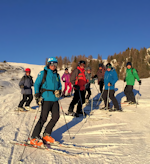
SKIbetter Roger Adult Group Recreational Ski Coaching

Over many years SKIbetter has committed itself to the the betterment of all skiers by offering affordable 1-to-1 Coaching sessions that are tailored to the individual to enable a more powerful coaching system for those that want to get to even higher levels and be in control of their coaching plan. To compliment this we have a new online coaching system that combines Technical coaching and fitness. 

The benefits of this programme will give you, your spouse, or your children...

  • detailed recorded performance analysis
  • more in-depth feedback and video analysis
  • personalised coaching and profiling
  • tailored coaching to your needs
  • increased knowledge and understanding
  • delivered outside of normal group sessions
  • enables you to keep your skiing performance and development on track
  • achievable short term, medium term and long term goal setting
  • keep you focused through recorded agreed goal setting feedback and interventions
  • benefit from continuous and periodised coaching throughout the year
  • direct coaching link in to group sessions
  • accelerated learning opportunity 

Find out more


.

INSTRUCTOR & COACH, TRAINING & MENTORING

SKIbetter Instructor and coach development training and mentoring with Roger

SKIbetter can also arrange group sessions outside of Midlands Ski Club Sessions at various locations such as indoor snow facilities like Chill Factore as well as outdoor artificial slopes in and around the Midlands. 

What Where and When... Please contact us to find out what we can do for you where and when.


.

INSTRUCTOR & COACH, TRAINING & MENTORING

SKIbetter Instructor Coach Training and Mentoring

Have you ever thought I'd like to become a ski instructor or coach and in so doing expand your knowledge, learn how to teach and appreciate a deeper understanding of skiing development. Roger can help you through his master performance and instructor training sessions for either Snowsport England or BASI.

Help me with my Ski Instructor or Coach Qualifications.


.

STRENGTH, FITNESS, AGILITY & ENDURANCE COACHING


SKIbetter Roger

IMPROVE YOUR BODY... to IMPROVE YOUR THRILL

YOUR BODY is a vital part of your EXCITING adventure EXPERIENCE regardless of your sport.

So TRAIN YOUR BODY to be BETTER, SAFER, STRONGER for LONGER

Help me with my Strength, Conditioning and Fitness.


Introduction to the SKIbetter 1-to-1 Coaching System

I introduced this system many years ago,

  • has a proven to be very successful,
  • has formed the bedrock and foundation of many successful ski racers, advanced recreational skiers, instructors and coaches,
  • has played a major part of producing many individual and team successes,
  • many members of the Midlands Ski Club, CESA Region and other School teams have benefited,
  • over the years has contributed to the creation of many local, regional, national individual and team champions.

It has evolved from a purely paper based system to the current offering today using various latest technologies to support the learning experience. I am currently moving to a new online system to take the programme forward in to the future that will include fitness as well as skiing race and recreational skill, and performance development, as I believe skill development, performance delivery, fitness and conditioning are deeply intertwined.

Benefits

The benefits of this programme will give you, your spouse, or your children...

  • Detailed recorded performance analysis
  • more in-depth feedback and video analysis
  • personalised coaching and profiling
  • tailored coaching to your needs
  • increased knowledge and understanding
  • delivered outside of normal group sessions
  • enables you to keep your skiing performance and development on track
  • achievable short term, medium term and long term goal setting
  • keep you focused through recorded agreed goal setting feedback and interventions
  • benefit from continuous and periodised coaching throughout the year
  • direct coaching link in to group sessions
  • accelerated learning opportunity

Structure

The SKIbetter personal 1-to-1 coaching system can be tailored to the individual in terms of number of sessions when, where, how often etc. my base offering as an example is:

  • Four quarterly 2 hour coaching development and performance sessions per year would be ideal but more typically this ends up being 3 times per year.
  • These would be spread out across the year depending on your requirements, typically:
    • October
    • January
    • April
    • August
  • Additional sessions can be arranged to cover incidents such as 
    • Reintroduction to skiing after injury
    • Getting used to new equipment
    • Overcoming dips in performance
    • Extra pre-event preparation, on snow or in the alpine environment
    • Direct personalised coaching
    • Race support
  • Secure online recording and feedback using the SKIbetter Online System and/or Dropbox account using a parent/adult email account unless specifically authorised and will incur an annual subscription charge.

Costs

There are multiple elements to consider, some not in SKIbetter's control:

  • Facility Hire (Swadlincote/Ackers Adventure/Chil Factore etc.)
  • Myself (SKIbetter Performance Coaching), I charge pro rata by the hour.
  • Each session is generally two hours long per person but can be longer or shorter depending on the situation.
  • SKIbetter Online System subscription charge.
  • Other charges: non-local transport, accommodation etc.

I am happy to discuss any other options and provide any other additional information so please do not hesitate to ask.


SKIbetter Partners and Associations